The Elder Scrolls III: Tribunal is the first expansion for Bethesda Game Studios' The Elder Scrolls III: Morrowind. It takes place in the temple-city of Mournhold, the capital of Morrowind, located in the larger city of Almalexia. The title refers to the three 'Living Gods', known as the Tribunal.
http://tvtropes.org/pmwiki/pmwiki.php/Franchise/TheElderScrolls
Go To
Elder Scrolls Legends Card List
Advertisement:
The Elder Scrolls is a massively popular Western RPG series produced by Bethesda Softworks. 'TES' or 'ES' for short, the series is renowned for its Wide Open Sandbox style of gameplay, allowing the player to play as a heroic or diabolical character, to pursue the main quest with vigor or to ignore it entirely, and to gain prowess and fame through working for factions, guilds, military legions, and even the gods themselves.
The Elder Scrolls games are set in Tamriel, a continent roughly the size of Africa, on the planet Nirn. Tamriel is shared by ten playable races (eight before Morrowind) - four races of Mennote , four races of Mer (Elves)note , and two '{{Beast Man}}Races'note . Numerous other races are present in the series' lore and backstory, most notably the extinct Dwemer (Deep Elves or 'Dwarves') and corrupted, monstrous Falmer (Snow Elves).
Advertisement:
According to former series developer Ted Peterson, the name The Elder Scrolls was chosen as the surtitle to Arena simply because 'it sounded cool', and it wasn't determined until later in development what an 'Elder Scroll' actually was in-universe. ('Fragments of Creation' which simultaneously record past, present, and future events but tend to have nasty side-effects on mortal readers including blindness and insanity.)
The series has a large and industrious Game Modding community, which exponentially increases the content of each game while also fixing bugs, adjusting features to the fandom's liking, and much more, right up to complete overhaul mods.
Since Morrowind, each installment in the series has been released on both PC and console, allowing the series to get into the hands of a wider audience.
Advertisement:
The main series Elder Scrolls games are:
- Arena (1994): The benevolent Emperor of Tamriel, Uriel Septim VII, has been overthrown by his Evil Chancellor/Imperial Battlemage, Jagar Tharn, who has trapped the Emperor in Oblivion, assumed his appearance, and has been reigning in his stead. However, the ghost of Tharn's late apprentice, Ria Silmane, teams up with a minor noble (the Player Character) to fight the usurper. Together, they must collectthe pieces of the Staff of Chaos in order to defeat Tharn and rescue the Emperor. Arena was originally going to be about, well, gladiatorial combat arenas, but that idea was scratched in favor of adapting the developers' home-brew D&D setting, Tamriel, into a computer game note . The fast-paced gladiatorial combat style remained, though, and Arena was much more action-oriented than other RPGs of the time. The game was met with lackluster sales, but developed a strong enough cult fanbase to warrant a sequel. In 2004, Bethesda released Arena as freeware download.
- Daggerfall (1996): Set six years after the events of Arena, the PC, a personal acquaintance of Uriel Septim VII, is sent to the western province of High Rock to investigate the ghost of its former King Lysandus, who now haunts the eponymous city of Daggerfall. Cooperating with the Emperor's Blades, the PC soon uncovers a sinister plot to reactivate the Lost Superweapon Numidium, a Humongous Mecha originally used to forge the Third Tamrielic Empire. Several factions in the region enter the fight for controlling the Numidium, and it depends on the PC who gets it. Also of note is the emphasis on side-quests. Increased after seeing how much time Arena players spent on them, the designers decided to put them in the spotlight in Daggerfall. Daggerfall features several different factions for the player to join outside of the main quest, all of which combine to add hundreds of hours of side-questing. It also has positively HUGE randomly generated dungeons, often 'designed' in the silliest ways possible. Daggerfall is unfortunately a prime example of an Obvious Beta, with Game Breaking Bugs abound. Still, it was successful enough to keep the series alive. In 2009, Bethesda released Daggerfall as a freeware download.
- Morrowind (2002): Set 10 years after the events of Daggerfall, a convict from the Imperial City Prison (the PC) is released in the north-eastern province of Morrowind on the Emperor's direct orders. Guided by the Blades, the PC investigates the local prophesies of The Chosen One, known as the Nerevarine, who will save the land from the dreaded 'Blight'. Tracing the source of the Blight to the evilPhysical God, Dagoth Ur, the PC is launched into a labyrinthine plot involving an Ancient Conspiracy, prophecies, lost prophecies, false prophecies, reincarnation, gods, backroom politics, gang wars, and The Corruption. Like Daggerfall, Morrowind offers Loads and Loads of Sidequests, of which some of the faction questlines are nearly as expansive as the main quest itself. Morrowind is significantly smaller in scope than its predecessors (a 'mere' 9 square miles as opposed to thousands, and a non-infinite number of side-quests), but manages to come off as much more epic anyway due to the quality of the writing and the diverse, exotic landscapes. It's also notable for being much, much weirder than the rest of the franchise, being set in an alien landscape populated by Dunmer (Dark Elves), Bizarchitecture, dinosaur-like fauna, giant arthropods, Living Gasbags, Cthulhumanoids, and more. In part thanks to its availability on both PC and X-Box, Morrowind was a critical and commercial hit, being Bethesda's Breakthrough Hit and introducing a massive Newbie Boom to the series.
- Tribunal (2002): An attack by the Dark Brotherhood brings the PC to Morrowind's capital of Mournhold. While investigating the attack, the PC becomes involved in a power struggle between the King of Morrowind, Hlaalu Helseth, and the Tribunal deity, Almalexia. It's noticeably more challenging than the main game, and intended for mid-to-high level characters. Unlike the rest of the game, you are restricted to only one part of the stated-to-be massive city and the sewers/ruins beneath it.
- Bloodmoon (2003): Arriving on the frigid northern island of Solstheim, the PC runs into ravaging werewolves and is soon embroiled in a ritual conducted by the Daedric Prince Hircine to determine the strongest fighter on the island. Naturally, the PC has to participate, all the while helping an Imperial mining colony to grow from literally nothing into a thriving frontier settlement (with plenty of interesting moral dilemmas along the way).
- Oblivion (2006): Set four years after the events of Morrowind, Emperor Uriel Septim VII is assassinated by the Mythic Dawn, but not before seemingly accidentally freeing yet another convict from the Imperial City Prison (the PC). The PC then joins the Blades in their search for the last remaining heir to the Empire, Martin Septim, against the backdrop of an ongoing invasion from Oblivion by the Daedric Prince Mehrunes Dagon, whom the Mythic Dawn worships. Oblivion was the first big-name RPG for the 7th generation of consoles, and made full use of the Xbox 360's and Playstation 3's technical capabilities. However, complaints were rampant among series veterans that it had been dumbed-down for casual gamers, what with arrows pointing to your objectives, overdone Level Scaling, and simplified role-playing elements. A simplified 'remake' of Oblivion was released for mobile phones. A PSP version was also planned and demonstrated, but was cancelled.
- Knights of the Nine (2006): The PC investigates a brutal attack on the local chapel to discover that an ancient Evil Sorcerer plans to destroy Cyrodiil and only certain artifacts can defeat him. In order to defeat him, the PC must recover all of the artifacts and reestablish the order of eponymous Knights of the Nine.
- Shivering Isles (2007): The PC is summoned by the Daedric PrinceSheogorath to help prevent the regular destruction of his Oblivion realm. As one might expect in the realm of the Mad God himself, there is plenty of absurdity and hilarity which made the expansion an instant critical and fan favorite.
- Skyrim (2011): Set 200 years after the events of Oblivion, the Tamriellic Empire is in bad shape, being slowly picked apart by its reformed ancient rival, the Aldmeri Dominion led by the fascistic Thalmor, through means of subterfuge, imposing treaty terms, and outright war. Said imposing treaty terms have caused significant strife in the few remaining provinces of the Empire, with Skyrim itself, homeland of the Nords, erupting into full blown Civil War. The PC is unintentionally captured by the forces of the Empire along with a contingent of the Stormcloak rebels, including their leader, Ulfric Stormcloak. Moments away from being executed, the PC and the Stormcloaks are saved when Alduin, the 'World-Eater', swoops in and destroys the village. Now with dragons appearing all over Skyrim, the PC discovers that they're the Dovahkiin (Dragonborn) and the only one able to stop Alduin from ushering The End of the World as We Know It. Skyrim was another absolute smash hit for Bethesda, though critical bugs were rampant for months after release and the game eventually became unplayable on the PS3 once the save file became large enough, leading to strife within the fandom. A remastered 'Special Edition' was released in 2016 for PC, Xbox ONE, and PlayStation 4. The Special Edition updates Skyrim's graphics and engine to that of its Bethesda sister property, Fallout 4, and also includes modding capabilities on console for the first time in the ES series. In 2017, Skyrim was also released for Nintendo Switch and PlayStation VR.
- Dawnguard (2012): The Dragonborn gets involved in a conflict between the newly reformed Dawnguard and a race of vampires in north-western Skyrim, who wish to fulfill an ancient prophecy and permanently blot out the Sun.
- Hearthfire (2012): The Dragonborn gets into homebuilding and childrearing.
- Dragonborn (2012): The Dragonborn visits Solstheim, previously the setting for Bloodmoon, and faces off against the First Dragonborn, an undead Dragon-Priest named Miraak who, like the Dragons, is now seeking to return to life.
- The Elder Scrolls VI (TBA): The next main installment in the franchise was announced during 2018's Electronic Entertainment Expo. No details were revealed other than a brief glimpse of what appears to be the game's setting, and development of the title is scheduled to be sometime after Starfield. According to a later interview with Bethesda Softworks vice president Pete Hines, the game is still in very early pre-production, and a release is at least some years out. Like Starfield, the game is expected to be released on PC and on the Ninth Generation of Video Game Consoles.
Bethesda has also produced several other games and media set in the Elder Scrolls universe:
- The Elder Scrolls In-Universe Books (1996 to present): Covers the various Fictional Documents and In Game Novels found in the series from Daggerfall on.
- An Elder Scrolls Legend: Battlespire (1997): Originally planned as an expansion for Daggerfall, Battlespire was released as a spin-off Dungeon Crawler. Set during the time period of Arena, the Imperial Battlespire, located in the 'Slipstream' between the mortal plane (Mundus) and the void of Oblivion, is the training rounds for the elite ImperialBattlemages. You play as a recruit who, on the final day of your training, finds that the Battlespire has been invaded by the Daedric forces of Mehrunes Dagon, the Daedric Prince of Destruction. Many are dead and your partner has been taken captive. You must fight through the various levels of the Battlespire (and a few realms of Oblivion) in order to rescue your partner and stop the invasion. It is the only game in the series to include multiplayer, though that addition proved a spectacular failure and Bethesda didn't try it again until Online.
- The Elder Scrolls Adventures: Redguard (1998): Redguard is a spin-off Action-Adventure game with very few RPG elements. Some 400 years before Arena, a Redguard by the name of Cyrus travels home to find his sister missing and himself embroiled in a web of political intrigue. It was well received by critics and fans, but due to the cost of production and being built on outdated technology, it was a financial flop. The Pocket Guide to the Empire, which came with the game, gave one of the first comprehensive looks at the series' background lore, which would be greatly expanded on in future games.
- The Elder Scrolls Travels (2003-2004): A series of small, mobile phone games developed for Java-enabled devices, including the N-Gage. These include Dawnstar (2003), Stormhold (2004), and Shadowkey (2004). The canonicity of each unclear at best.
- The Elder Scrolls Novels (2009-2011): The Infernal City (2009) and Lord of Souls (2011) by Greg Keyes. Set forty years after Oblivion, they tell of the appearance of the floating city of Umbriel in Tamriel and the devastation it wrought.
- The Elder Scrolls Online (2014): An MMORPG prequel to the main Elder Scrolls series, set during the Second Era interregnum between the fall of the Akaviri Potentate and the rise of the Septim Dynasty. The PC has had their soul stolen by the Daedric Prince Molag Bal, and they must stop him as he attempts to take over Tamriel. Meanwhile, the Ruby Throne is empty, and three alliances vie for control of Cyrodiil and the Empire. Originally subscription based, it went 'Buy to Play' in March 2015, meaning you only need to buy the game to play it.
- Imperial City (2015): The PC helps put an end to Molag Bal's plot in the Imperial City itself.
- Orsinium (2015): The PC helps the Orcish king, Kurog, establish a new city of Orsinum in the mountains of Wrothgar.
- Thieves Guild (2016): The PC joins the Thieves Guild, and assists in their power struggles against the corrupt merchant lords in the Hew's Bane peninsula of Hammerfell.
- Dark Brotherhood (2016): The PC joins the Dark Brotherhood in their sanctuary in the Gold Coast region of Cyrodiil, while a knightly faction called The Order of the Hour seeks to eliminate the guild.
- Morrowind (2017): The PC travels to Vvardenfell and discovers that Vivec is losing his divine power, putting Vvardenfell in danger of destruction.
- Clockwork City (2017): The PC travels with Divayth Fyr to Sotha Sil's eponymous realm, only to find it under attack by shadowy Daedric forces.
- Summerset (2018): The PC discovers, on the High Elf isle of Summerset, that a Daedric threat puts all of Tamriel in danger.
- Elsweyr (2019): The PC travels to the Khajiit homeland of Elsweyr, where a trio of dragons have just been released and now threaten the province.
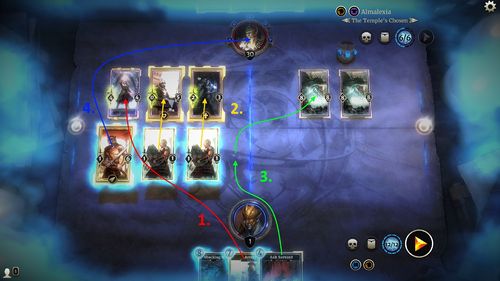
- The Elder Scrolls: Legends (2015): A digital strategy card game for PC and tablet, which features a story mode (taking place around the Great War before the events of Skyrim) in addition to normal matches.
- The Fall of the Dark Brotherhood (2017): Expanding on events described in Cicero's journal in Skyrim, the Forgotten Hero takes part in the Dark Brotherhood's salvation or destruction.
- Return to Clockwork City (2017): Long after Sotha Sil's death, the Forgotten Hero and their companions make it to the Clockwork City and discover secrets of both its past and present.
- The Elder Scrolls: Blades (2019): Revealed during the 2018 Bethesda E3 Showcase, Blades is an all-new Elder Scrolls game set in an (as of yet) unknown time. It features an exiled member of The Blades, and aside from exploring procedurally-generated dungeons, the player can also build towns and fight other players in an arena. Blades will be free-to-play on iPhone, iPad, and Android devices at the time of release, with PC and VR versions also announced with cross-play capability across systems. Originally set to launch in Q4 2018, the release was pushed back indefinitely into 2019 (with many suspecting that the delay is related to the disastrous launch of Fallout 76).
- The Elder Scrolls: Call to Arms (2019): : A 32mm miniatures wargame from Modiphius Entertainment.
An Elder Scrolls Anthology was released in 2013 for the PC. It includes every game in the main series (Arena, Daggerfall, Morrowind, Oblivion, and Skyrim) along with all the add-ons and expansions for the most recent three.
C0DA is an unofficial graphic novel script by former series developer Michael Kirkbride meant to encourage the idea of The Elder Scrolls lore as a living open-source world.
The Elder Scrolls has inspired many world-building projects, such as The Uutak Mythos.
The Series as a whole provides examples of:
Index
Recently, the development of Bethesda’s CCG, The Elder Scrolls: Legends, changed hands from Dire Wolf Digital to Sparkypants Studios, which is mostly known for its real-time strategy game Dropzone. According to Bethesda, this shift was to better support the players and provide more regular updates to the game. In order to help clear up some confusion regarding the change, we spoke with Sparkypants’ QA manager Gavin Niebel.
Hello and thank you for taking the time to speak with MMOGames. Could you please introduce yourself and role with the company?
Hey there, thanks for taking the time to reach out to us. My name is Gavin Niebel and I am the QA Manager here at Sparkypants, but you can also find my hands in production, community management, and some bug fixing.
How long ago did Sparkypants know that it was going to take over development of The Elder Scrolls: Legends and what kind of preparations did you make?
I believe final paperwork was signed in the last week of December 2017, so preparation was a large combination of getting an engine design spun up as well as playing massive amounts of matches using the version of the game that was already live. A lot of us are not only fans of Elder Scrolls lore, but very much into card games and board games, so you could say that everything leading up to this collaboration with Bethesda was unknowingly a form of preparation.
What are some of the key changes that you plan to make to the game?
What you have already seen with our UI and art direction is obviously one of the biggest changes we planned to make. Beyond that, we definitely want to improve upon the frequency of updates for our players; new cards, new stories, new puzzles, as well as more customization options like new playmats, more cardbacks, and customizable avatars.
I heard that you’re working on a new Tournament game mode. What are some of its features and what can players expect from it?
We definitely have some plans in this regard but, as you’ll see in the last question, our first goal is to get the game in great shape and with a platform we can reliably build upon. So, unfortunately, I can’t reveal anything on this just yet.
Previously, players were rewarded with a new card at the end of every season based on their ranking. Will this feature be coming back?
Yes, absolutely. October’s card may be delayed a few days but after that you can expect a normal cadence for the monthlies!
Will there be any new ways in which players can earn in-game currency or unlock cards?
We’ll explore all aspects of the game once we are on a stable footing but there’s not much I say on this right now.
Do you plan to continue to produce story chapters, similar to The Fall of The Dark Brotherhood?
Yes, without a doubt. We have one in the works right now, which Pete mentioned during QuakeCon called, Isle of Madness. And while I have no official announcement about 2019 plans, I can say for sure our intention is to continue to produce more story chapters. We look forward to the response from our players.
KiCad is developed by the KiCad Developers Team, and features an integrated environment with schematic capture, bill of materials list, PCB layout and much more.Compared to the other free software alternatives, KiCad solves all stages with the same interface: Schematic Capture, PCB layout, Gerber generation/visualization and library editing. KiCad is an open source software suite for electronic design automation (EDA) made for designing schematics of electronic circuits and printed circuit boards (PCB). 
We’ve heard that the next expansion will be Isle of Madness. Is there anything that you can tell us about it, such as new cards, archetypes or abilities?
Unfortunately there isn’t anything I can really say at this point, other than what has already been announced. There will be about 40+ new cards and the story will be broken up into three parts. You’ll just have to wait for Bethesda’s own CVH to release more information in the coming weeks.
What does the future look like for The Elder Scrolls: Legends?
Very, very busy! Not only are we working on pushing out more updates to add layers of polish, we have the FrostSpark Collection coming very soon, adding 11 new cards to the game to hopefully shake up the existing meta. Beyond that, we’re working on the next story expansion, Isle of Madness, and more to come in 2019.
Is there anything else that you would our readers to know about the game?
By far our top priority is to continue polishing the game. Legends is a broad game. We completely re-created an excellent game that had been in development for years: client, game servers, backend services, operations, player migration, all of it. Realistically, it will take a few updates to shake out all the systems, to get into some real polish, and to start getting in some much-requested features. Hopefully players are starting to see that with the first couple of updates.
Simply put, all of us at Sparky are here for the players. That’s all we care about. We’re dedicated to making TESL shine brighter than ever before. We read all your comments on reddit and other social media, and really, it’s all about prioritizing. We’re working hard as hell to get as many fixes out the door, as fast as possible, so bear with us if some bugs take longer to fix than others. We’ll get there. Promise.
Related: Bethesda, CCG, Interview, Sparkypants Studios, The Elder Scrolls: Legends